Baylor College of Medicine and Allelica, a life sciences company that develops and commercializes clinical genetic tests for healthcare and pharmaceutical industries, have announced a strategic collaboration to integrate clinical, multi-ancestry polygenic risk score (PRS) testing into BCM's extensive patient services portfolio.

Genetic variation passed down through generations may influence cancer development
Researchers at BCM’s Dan L Duncan Comprehensive Cancer Center and Human Genome Sequencing Center investigated the extent to which germline or inherited structural variation (SV) influence gene expression in human cancers.
Read more

Using generative AI assistant to interpret pharmacogenetic test results
Investigators at Baylor's HGSC are studying whether an artificial intelligence (AI) assistant could be beneficial in answering questions about genetic test results for patients and physicians.
Read more

Genetic germline variations influence expression of cancer cell genes
Research by BCM’s Dan L Duncan Comprehensive Cancer Center and HGSC shows that specific germline structural variations represent potential candidates for cancer genetic testing. The findings are published in the journal Cell Reports Medicine.
Read more

Study finds ancestry-driven disparities in pathogenic variation
A study led by BCM-HGSC investigators reveals new insights to the frequency of pathogenic variation among different ancestry groups in a cohort of nearly 100,000 of the All of Us participants.
Read more

Primate genome sequencing reveals insight into evolution, biodiversity and applications for human health
A new investigation published in a series of studies in a special issue of Science analyzed the genomes of 233 nonhuman primate species and revealed key features of primate evolution, human disease and biodiversity conservation.
Read more

Baylor College of Medicine receives NIH funding to study somatic mosaicism
NIH Common Fund program called Somatic Mosaicism across Human Tissues (SMaHT) Network awarded BCM researchers grants totaling more than $17.8 million to develop tools cataloging extent of somatic mosaicism in different cell types, tissues and life stages.
Read more
Human Genome Sequencing Center Clinical Lab
 The HGSC Clinical Laboratory (HGSC-CL) is the CAP/CLIA certified molecular diagnostic laboratory operating within the Human Genome Sequencing Center at Baylor College of Medicine.
With a commitment to improving health care through genomic testing, HGSC-CL offers clinical testing services in support of large-scale clinical sequencing efforts.
Texas Medical Center Genomic Center for Infectious Diseases
 The Texas Medical Center Genomic Center for Infectious Diseases (TMC GCID) is the collaborative effort of a multidisciplinary, integrated team of basic and physician scientists at three institutions — Baylor College of Medicine, The University of Texas Health Science Center at Houston (UTHealth) School of Public Health, and The University of Texas MD Anderson Cancer Center.
The TMC GCID harnesses decades of experience in genomic sequencing, renowned clinical expertise and the use of novel ex vivo models of human intestinal and pulmonary function to create a platform for large scale genomics-based interrogation of host-mucosal pathogen interactions in the context of human tissues.
BCM-HGSC Long Read Sequencing Laboratory
 The BCM-HGSC has been a leading institution in the development of cost effective, large-scale sequencing methods across a multitude of sequencing platforms, testing more than 250,000 samples. Our current instrumentation includes the Pacific Biosciences Sequel II and the Oxford Nanopore Technologies PromethION, and we are closely engaged with each of these platforms to test improvements to sequencing chemistry and software including early access to new protocols. Given the large capacity of these platforms, long read sequencing opportunities are available to those interested.
Long Read Sequencing Seminar Series
The Human Genome Sequencing Center at Baylor College of Medicine hosts quarterly virtual seminars encompassing various long read sequencing technologies applied to diverse research areas. The purpose of these seminars is to provide an environment to learn more about these technologies and how the scientific community is using these platforms in research and clinical environments.
Primate genomes studies published in Science
 A new investigation led by researchers at Baylor College of Medicine’s Human Genome Sequencing Center, the Institute of Evolutionary Biology and Pompeu Fabra University in Barcelona, Spain, and Illumina, Inc. analyzed the genomes of 233 nonhuman primate species and revealed key features of primate evolution, human disease and biodiversity conservation. The findings are published in a series of studies in a special issue of the journal Science.
› Read the special issue of Science
› Read announcement from Baylor College of Medicine
Human Genome Sequencing Center awarded a grant from National Institute of Standards and Technology (NIST)
The Baylor College of Medicine Human Genome Sequencing Center (BCM-HGSC) was recently awarded a grant by the National Institute of Standards and Technology (NIST). The Genome in a Bottle (GIAB) consortium led by NIST routinely develops reference datasets for technology and method standardizations within and across entities. Principal Investigators Drs. Harsha Doddapaneni and Fritz Sedlazeck, who are each Associate Professors in the BCM-HGSC, said that the significance of this effort is that new datasets, including RNA-Seq references for existing GIAB samples and new cancer (tumor-normal) information, will improve standardization and calibration in ongoing genome studies.
Towards population-scale long-read sequencing
Advances in long-read sequencing technologies and bioinformatics have enabled the first population-scale studies with long-read sequencing in recent years. In a new review published in Nature Review Genetics, Dr. Fritz Sedlazeck and colleagues discuss these recent developments and highlight project strategies for experimental design with Pacific Biosciences and Oxford Nanopore Technology systems.
Uniquely comprehensive Pan-Cancer Atlas provides essential resource
A collection of 27 papers from The Cancer Genome Atlas (TCGA) consortium has been published reporting on the integrated project to analyze all 33 cancer types and to classify mutations and specific pathways. Many of the papers feature significant contributions from Baylor College of Medicine and its Human Genome Sequencing Center researchers. The findings from the 11,000 patient cohort data appear in Cell publications.


BCM-HGSC in the News


275 Million New Genetic Variants Identified in NIH Precision Medicine Data
Researchers have discovered more than 275 million previously unreported genetic variants, identified from data shared by nearly 250,000 participants of the National Institutes of Health’s All of Us Research Program. The findings are detailed in Nature.
In a companion study published in Communications Biology, a research team led by Baylor College of Medicine reviewed the frequency of genes and variants recommended by the American College of Medical Genetics and Genomics across different genetic ancestry groups in the All of Us dataset and found significant variability in the frequency of variants associated with disease risk between different genetic ancestry groups and compared with other large genomic datasets.

TRISH to study spaceflight effects on genome and nervous system on Axiom Space's Ax-3 Mission
The Translational Research Institute for Space Health (TRISH) will conduct a suite of human health and performance research projects during Axiom Space’s upcoming Axiom Mission 3 (Ax-3) to the International Space Station (ISS), scheduled to launch in 2024. The TRISH EXPAND biomedical research projects for Ax-3 includes Space Omics + BioBank, which gathers biological specimens from astronauts before and after their mission to assess the effects of spaceflight on the human body at the genomic level.

Baylor College of Medicine recognizes research excellence with DeBakey Awards
Six Baylor College of Medicine faculty members were selected as recipients of the 2023 Michael E. DeBakey Excellence in Research Award. Dr. Fritz Sedlazeck and Dr. Jeffrey Rogers were among those recognized for their work during the Sept. 18 ceremony at Baylor.

Baylor College of Medicine and Texas Children’s Hospital launch a new clinical genomic sequencing program to help patients with an undiagnosed condition
About 35% of severe developmental childhood genetic diseases have a known disease-causing gene mutation. Baylor College of Medicine and Texas Children’s Hospital researchers Dr. Hugo J. Bellen, Dr. Richard Gibbs and Dr. Katherine Y. King have launched a new genomic sequencing initiative to identify the genetic mutations and the underlying mechanisms responsible for the remaining two-thirds of these pediatric conditions.

Your cells don’t have the genome you were born with. Project aims to chart impact of new mutations
Science takes a look at Somatic Mosaicism Across Human Tissues (SMaHT), an ambitious National Institutes of Health (NIH) project to map genomic diversity, and speaks with Dr. Harsha Doddapaneni who helps lead one of the SMaHT sequencing groups at the Baylor College of Medicine Human Genome Sequencing Center (BCM-HGSC).

Baylor College of Medicine Human Genome Sequencing Center adopts Olink® Explore HT proteomics platform
The Baylor College of Medicine Human Genome Sequencing Center is incorporating the Olink Explore HT proteomics platform into its portfolio of world-class multiomics. The addition of Olink proteomic technology enables a more thorough understanding of the intricate connections between genes, proteins, and diseases that will lead to improved diagnostics, targeted therapies and the advancement of precision and personalized medicine.
NIH Somatic Variant Detection Program to Develop Novel Assays, Computational Tools
GenomeWeb takes a look at the Somatic Mosaicism across Human Tissues (SMaHT) program, a National Institutes of Health Common Fund project to accelerate research on the impact of somatic mosiacism on human development, aging and disease. SMaHT researchers, including HGSC's Dr. Fritz Sedlazeck, weigh in on the challenges and benefits of this groundbreaking program.

Baylor College of Medicine receives NIH funding to study somatic mosaicism
As part of a new National Institutes of Health Common Fund program called the Somatic Mosaicism across Human Tissues (SMaHT) Network, Baylor College of Medicine researchers received three grants totaling more than $17.8 million over five years to develop state-of-the-art tools to catalog the extent of somatic mosaicism in different cell types, tissues and life stages, to better understand how much somatic mosaicism influences human biology and disease.
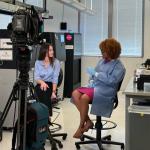
National DNA Day 2023: Inside look at BCM’s Human Genome Sequencing Center
In a special segment for National DNA Day, Fox 26 Houston reporter Chelsea Edwards visits the Baylor College of Medicine Human Genome Sequencing Center and talks with Dr. Richard Gibbs and the HGSC team about the history of the center and the cutting-edge research taking place in genomics.

Baylor College of Medicine Human Genome Sequencing Center celebrates 20 years since the completion of the Human Genome Project
On April 14, 2003, the National Human Genome Research Institute and its international partners, including the Baylor College of Medicine Human Genome Sequencing Center (BCM-HGSC), announced the completion of the Human Genome Project and the successful generation of a highly accurate and publicly available reference sequence of the human genome.
To celebrate the anniversary of completion of this unprecedented project, carried out from 1990 to 2003 and considered one of the most ambitious and important scientific endeavors in human history, From the Labs sat with Dr. Richard Gibbs, director of the BCM-HGSC since its establishment in 1996, to learn about the role BCM has played in this landmark global scientific effort.

The Human Genome Project Turns 20: Here's How It Altered the World
Marking the 20th anniversary of the announcement of the first complete sequencing of the human genome, Gizmodo takes a look at the achievements and ongoing legacy of the ambitious Human Genome Project (HGP). The tech website also interviews Dr. Richard Gibbs, founding director of the Baylor College of Medicine Human Genome Sequencing Center, which was one of five institutions that together contributed around 80% of the data for the HGP.

About Us
The BCM-HGSC, founded in 1996, is a world leader in genomics.
The fundamental interests of the BCM-HGSC are in advancing biology and genetics by improved genome technologies.
One of three large-scale sequencing centers funded by the National Institutes of Health, the BCM-HGSC's location at the heart of the Texas Medical Center provides a unique opportunity to apply the cutting edge of genome technologies in science and medicine.

Dr. Paul Klotman discusses Pangenome with Drs. Richard Gibbs and Amy McGuire
Human Genome Project marks 20th anniversary
Recent Publications
Related video
Achieving the Amazing: Alexis's Story
At age five, she couldn't walk. At 18, she made her college track team. Diagnosed with a rare genetic condition, Alexis Beery now receives the treatment she needs to keep moving fast.